Good morning, and welcome to Friday’s briefing. Today’s stories are about patience and the bill that comes with it. In Kingston, the government is preparing to ask for more time on its fiscal rules as the cost of rebuilding after Hurricane Melissa keeps climbing. Jamaica’s quiet role as a transit point for people deported from the United States is drawing fresh questions, even as most of the first group have now moved on. Next door, Haiti has pushed its first election in a decade back to July 2027, asking a weary country to wait yet again.
Further afield, Iran says four tankers caught fire after striking mines in the Strait of Hormuz, a day after US forces said the main shipping lanes were clear. That sent oil higher again, and anyone who buys fuel in Jamaica knows how quickly that travels. Finally, the world’s big central banks spent the week holding their nerve: the US Federal Reserve and the European Central Bank both left rates unchanged while inflation stays stubborn, and the ECB’s president announced she will leave early.
As always, every fact below links to its original source, and where we offer interpretation, we label it clearly. Let’s get into it.
1. Jamaica Signals a Longer Pause on Its Fiscal Rules
What happened
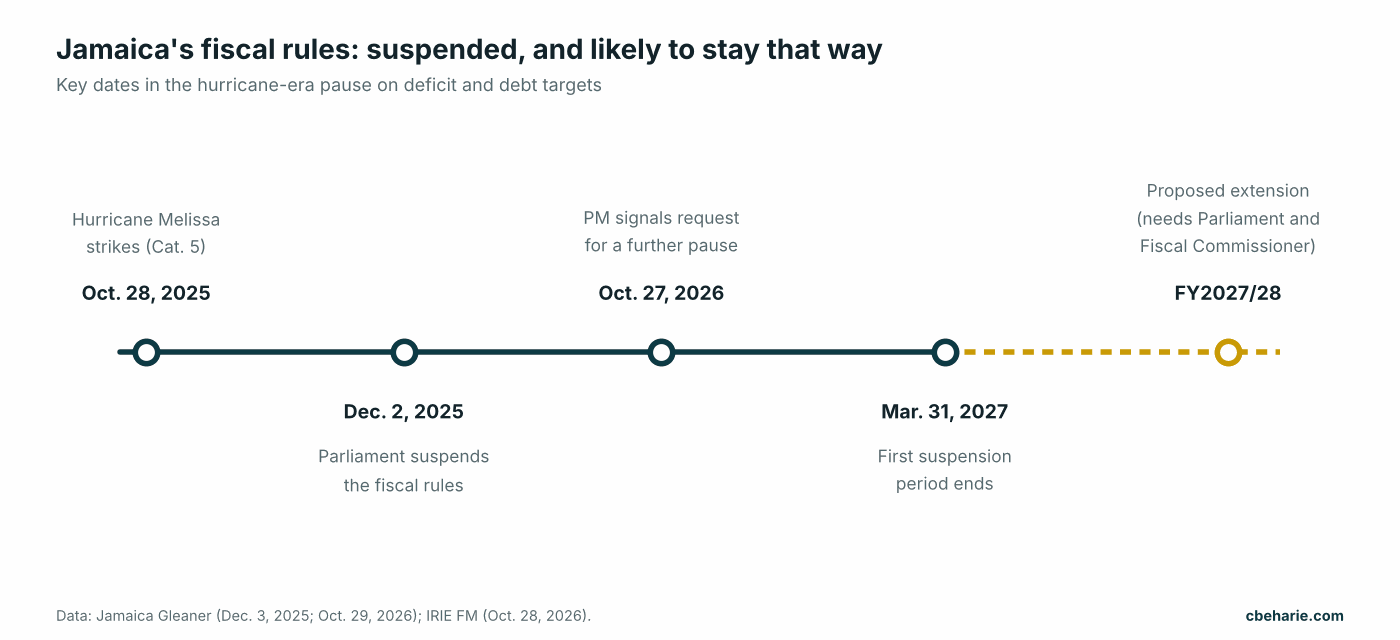
Prime Minister Andrew Holness has said his government will likely ask Parliament to extend the suspension of Jamaica’s fiscal rules into the 2027/28 financial year. IRIE FM reported that he made the announcement at a special press briefing at Jamaica House on Tuesday, October 27, on the eve of the first anniversary of Hurricane Melissa. The reason, he said, is that the country still needs money for infrastructure, reconstruction and targeted help for households and businesses. In the same breath, he said the state itself must become more frugal and disciplined in how it spends.
This follows up on our earlier briefings marking Melissa’s anniversary, which focused on roof repairs and the pace of relief. Today’s development is different: it is about how Jamaica pays for the recovery, and how long it can keep bending its own budget rules to do so.
What the fiscal rules are, and why they were paused
Jamaica’s fiscal rules are legal limits that cap budget deficits and set a timetable for bringing down public debt. They have been central to the country’s hard-won economic credibility over the past decade. When Melissa struck as a Category 5 storm on October 28, 2025, causing an estimated US$12.2 billion in damage, those limits were set aside. The Jamaica Gleaner reported in December 2025 that Parliament approved the suspension after a brief hiccup: Opposition Leader Mark Golding spotted a flaw in the dates of the original order, which was withdrawn, corrected and re-tabled the same day. Finance Minister Fayval Williams said the first suspension period runs to the end of the financial year closing March 31, 2027.
The law permits an initial one-year suspension after a disaster, with room for one further extension. That is the door the government now plans to walk through.
The numbers behind the debate
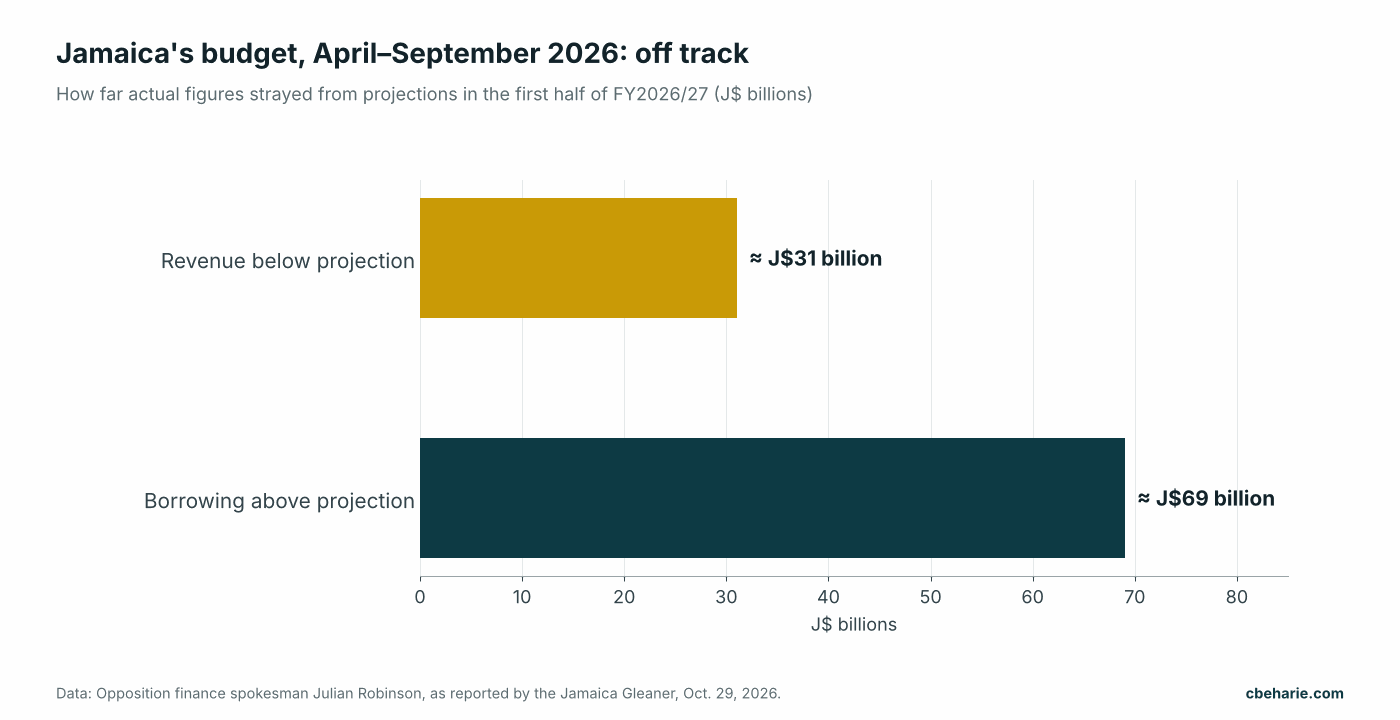
According to a detailed Jamaica Gleaner report published Thursday, Opposition finance spokesman Julian Robinson says the first half of this financial year, April to September 2026, went well off script. He puts revenue at roughly J$31 billion below projections and borrowing at about J$69 billion above them. In his view, the request for more time shows the recovery is moving more slowly than promised. He also criticized new taxes introduced during the recovery and the slow flow of aid to hard-hit families and small firms, and he asked the government to publish a revised timeline for cutting the debt-to-GDP ratio.
The government’s case, as Holness put it, is that reconstruction is not finished and that pulling back too early would leave communities and businesses stranded. Supporters of that view point out that the law was written precisely for moments like this.
It is worth being clear about what the two sides actually disagree on. Neither is arguing that Jamaica should abandon fiscal discipline, and neither denies that the hurricane blew a hole in the public finances. The dispute is about pace, transparency and priorities: how quickly the deficit should narrow, how openly the government should share its revised debt path, and whether new taxes and slow aid delivery are putting too much of the burden on those least able to bear it. Those are fair questions for any democracy to debate in the open.
The watchdog and the experts
An extension is not automatic. Fiscal Commissioner Courtney Williams told the Gleaner that the government must make a formal request to his office, and that he must validate the need before any extension takes effect. As of the Gleaner’s report, no letter had yet arrived. He said he will look at whether Melissa is still disrupting economic activity and revenue, and at how much restoration spending lies ahead.
Economist Keenan Falconer told the paper the move was expected and should not alarm international creditors, since the law explicitly allows it. He suggested the government front-load reconstruction spending over the next 18 months while the window is open. Jamaica Chamber of Commerce president Emile Leiba said the business community supports the move if it meets urgent needs, but stressed that it should last only as long as necessary so the country does not slide back toward its old economic troubles.
Other figures released this week show how much of the recovery bill falls outside government budgets. The Jamaica Observer reported that the Insurance Association of Jamaica says 91.1 percent of tracked Melissa claims have been settled, with J$59.4 billion paid out, most of it for property. The association’s Tammara Glaves-Hucey put it plainly: “Jamaica cannot wait for the next disaster to prepare for it.”
Why it matters, and what to watch
What this could mean (analysis): Jamaica spent years building a reputation for fiscal discipline, and that reputation helped it borrow more cheaply. A second year of suspended rules is legal and widely anticipated, but the real test is whether the government pairs it with a clear, published path back to the targets. Without that, critics will see drift; with it, investors may see prudence.
Watch for the formal letter to the Fiscal Commissioner, his assessment, and the parliamentary debate that follows. Also keep an eye on energy costs, which feed into every part of the recovery. The Observer also reported that Energy Minister Daryl Vaz warned the Jamaica Public Service Company this week that the “clock is ticking” on renegotiating its all-island license, which expires in 2027, with the government pressing for lower electricity rates and a target of 50 percent renewables by 2030.
2. Jamaica’s Transit Deal for US Deportees: Most of the First Group Has Left
What happened
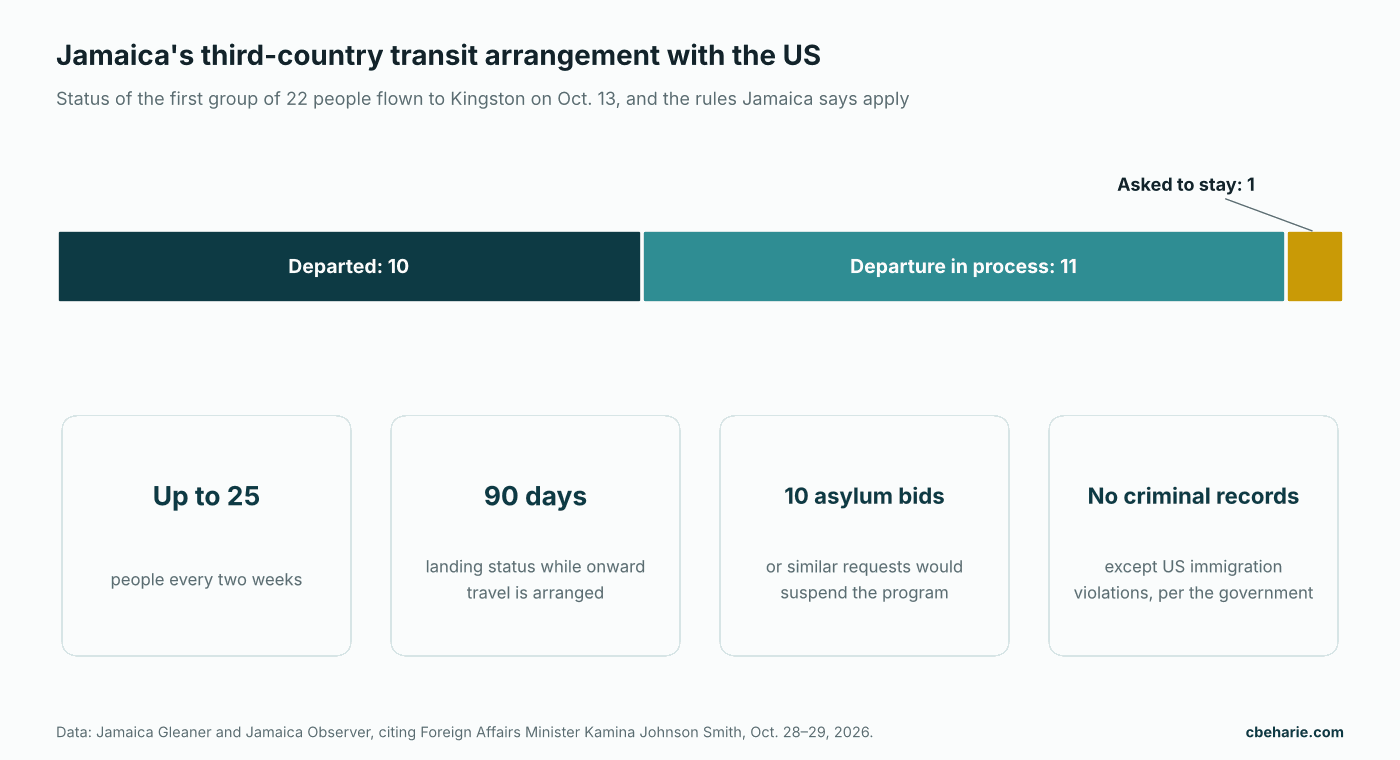
Nine more people sent to Jamaica under its third-country national, or TCN, arrangement with the United States have left the island. The Jamaica Observer reported that Foreign Affairs Minister Kamina Johnson Smith announced the departures at Wednesday’s post-Cabinet press briefing, saying the nine flew out on Tuesday, October 27. The Jamaica Gleaner reported that this brings total departures to 10 of the 22 people who arrived at Norman Manley International Airport on October 13, with 11 more at various stages of leaving. One person has asked to remain, and officials are explaining that the arrangement is for transit, not settlement.
Jamaica’s position on criminal records
The minister’s remarks came a day after the US Department of Homeland Security said its third-country agreements had led to the removal of people convicted of serious crimes, including murder and drug trafficking. Johnson Smith drew a firm line. Some countries have agreed to accept people with criminal backgrounds, she said, adding: “Jamaica is not one of them.” She said Jamaica’s agreement excludes anyone with a criminal record apart from violations of US immigration law, such as illegal entry, and that each person is vetted on both the US and Jamaican sides before arrival.
According to the Gleaner, the first group was made up of 15 men and seven women from Ecuador and a European country, with no children. The paper reported that Jamaica may receive no more than 25 people every two weeks, that each person receives 90-day landing status while onward travel is arranged, and that the program is suspended if 10 or more people seek to stay through asylum or other humanitarian routes. The International Organization for Migration, a UN agency, is helping with accommodation and departures.
Background: a secret agreement and a wider US policy
Jamaica signed a memorandum of understanding with Washington in June to act as a transit point. The Associated Press, via Al Jazeera, reported at the time of the first flight that the government said it would not fund the arrangement, and that the deal’s text has not been made public because the US has not agreed to release it. Opposition national security spokesman Fitz Jackson objected that Jamaicans were being asked to trust “a secret document that touches their security.”
Jamaica is far from alone. The same report cited an advocacy project affiliated with Refugees International and Human Rights First as counting at least 35 countries with third-country deportation agreements with the US. Rights groups have questioned the legality of sending people to places where they have no ties, and court challenges continue in the United States.
The competing views
Supporters of the government’s approach argue that the safeguards are real and measurable: a cap on numbers, a hard exclusion on criminal records, UN involvement, no cost to taxpayers, and a mechanism that halts the program if too many people try to stay. They also note that Jamaica’s relationship with Washington touches trade, security cooperation and the welfare of a vast diaspora, and that cooperation in one area can matter in others.
Critics counter that a deal Jamaicans cannot read is hard to judge, that the details have shifted in public statements, and that a small country should be wary of becoming part of a policy that human rights groups have strongly condemned. Both sides agree on one thing: transparency would settle a great deal of the argument.
There is also a human dimension that is easy to lose in the policy debate. The 22 people who landed in Kingston on October 13 were not Jamaicans, and most had no ties to the island. They arrived to an undisclosed location, with uncertain onward journeys, in a country they had not chosen. Whatever one thinks of the arrangement, the role of the IOM in caring for them, and Jamaica’s insistence that no one be held against their will, matters. How a nation treats the stranger passing through says something about its character, as many Jamaicans who have themselves migrated know well.
Why it matters for Jamaicans at home and abroad
What this could mean (analysis): For the diaspora, especially in the United States, deportation is not an abstract policy issue. Many Jamaican families know someone affected by US immigration enforcement. How Jamaica handles other countries’ nationals may shape how it is seen in Washington, and how it negotiates on behalf of its own citizens. Watch whether the remaining 11 depart on schedule, whether a second group arrives, and whether pressure to publish the agreement grows in Parliament.
3. Haiti Pushes Its First Election in a Decade to July 2027
What happened
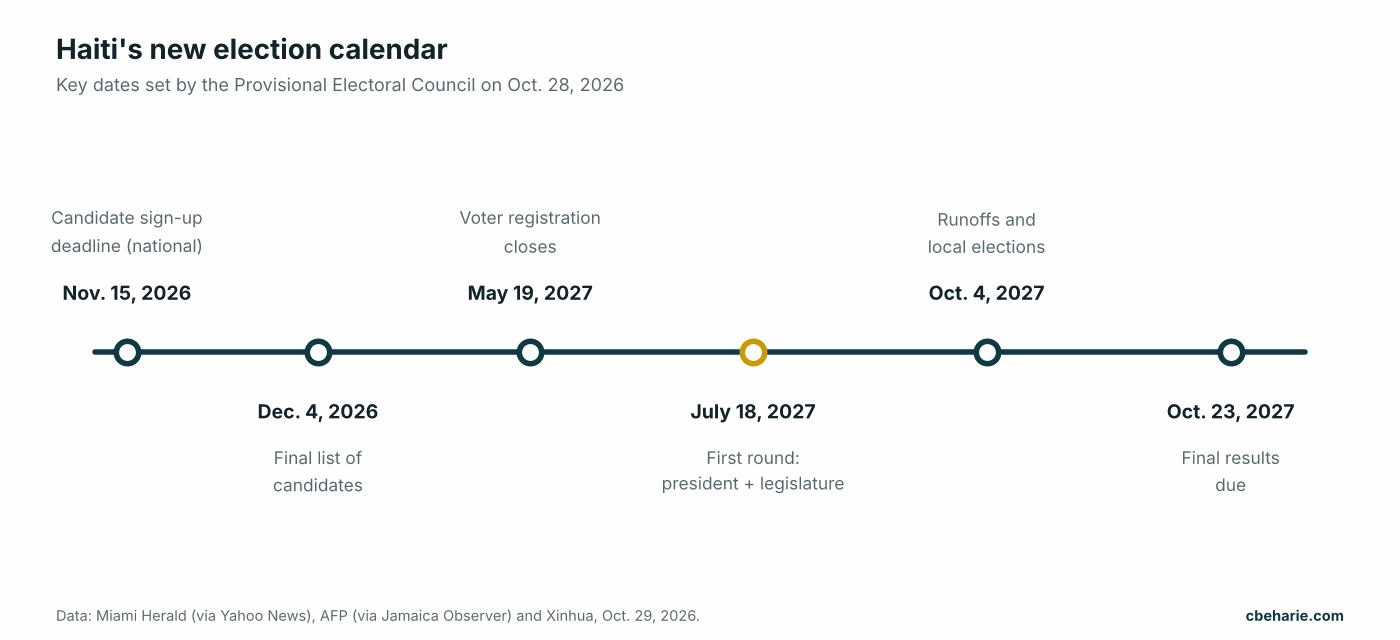
Haiti’s Provisional Electoral Council has set July 18, 2027, as the date for the first round of presidential and legislative elections, the country’s first national vote since 2016. AFP, via the Jamaica Observer, reported that the council announced the calendar on Wednesday evening, with a second round on October 4, 2027, and final results due October 23. Reuters reported that the first round had previously been set for December 13 of this year before the council said it was reviewing its schedule. Xinhua reported that local elections will be held alongside the runoffs in October 2027.
Registration and candidates
The Miami Herald reported that the council also extended deadlines. Presidential and legislative candidates now have until November 15 to register online, local candidates until November 30, and a final list of qualified candidates is due December 4. Voter registration will stay open until May 19, 2027. As of Wednesday, 887,362 Haitians had registered, out of roughly 6.5 million people holding the national ID card needed to sign up. Online registration is now possible, which matters in a country where reaching a registration center can mean traveling gang-controlled roads.
The Herald also reported that the council removed requirements that had made it harder for sanctioned individuals to run. Several registered candidates have been sanctioned by the United States, Canada or the European Union, including former President Michel Martelly, who filed to run again last week. The ambassadors of France and Spain have publicly opposed sanctioned figures standing for office, and observers worry that looser rules could help people with gang ties win power.
Background: years without an elected leader
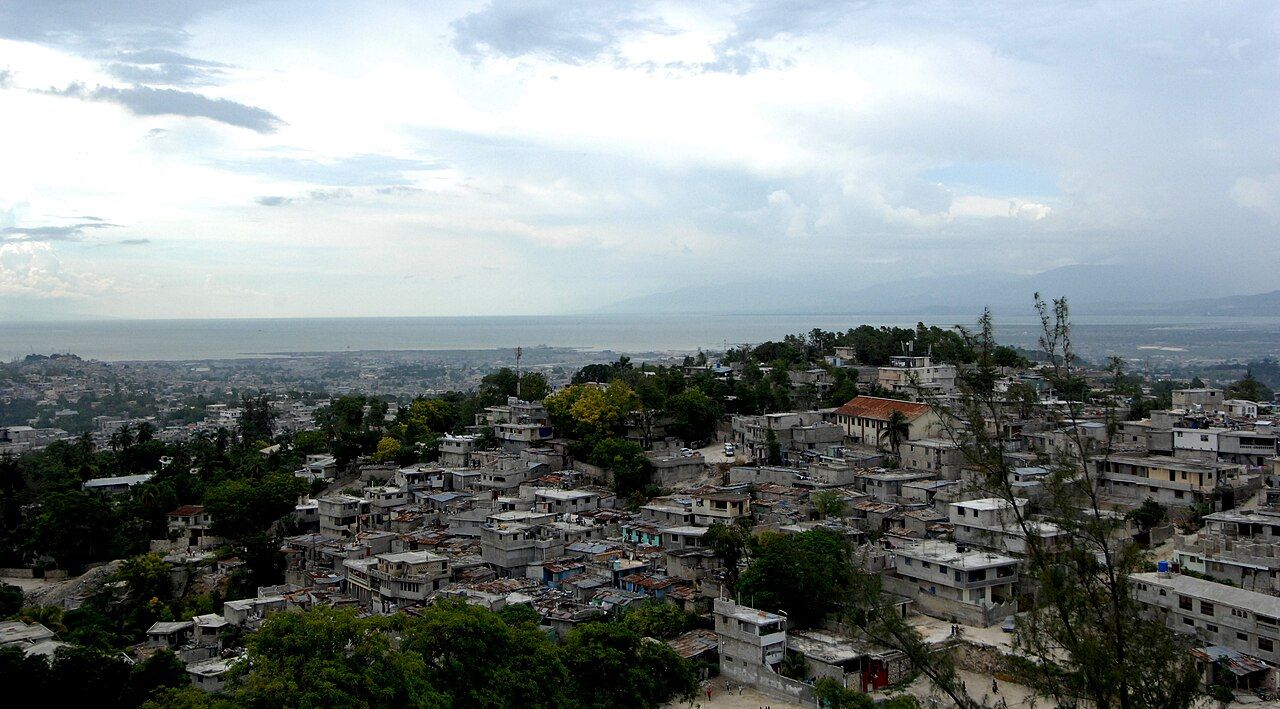
Haiti has had no elected president since Jovenel Moïse was assassinated in July 2021. According to Xinhua, a Transitional Presidential Council held presidential powers from April 2024 until its mandate expired on February 7, 2026, when those powers passed to the Council of Ministers led by Prime Minister Alix Didier Fils-Aimé.
The security picture remains grim. AFP reported that UN human rights chief Volker Türk said earlier this month that gang violence had killed or wounded at least 5,700 people this year, adding that “the real figures are likely much higher.” The International Organization for Migration says nearly 1.5 million people are internally displaced. A UN-backed Gang Suppression Force is meant to reach 5,500 personnel but has about 1,500 so far, and the Herald noted that El Salvador is sending hundreds of soldiers outside that UN framework.
Why it matters for Jamaica and CARICOM
Haiti is a full member of CARICOM, and its crisis is a regional concern, not a distant one. Jamaica has been among the Caribbean countries most engaged in efforts to stabilize Haiti, and instability there affects migration, maritime security and the credibility of the regional bloc.
The Haitian diaspora is also a major stakeholder. Millions of Haitians live abroad, in the United States, Canada, France and across the Caribbean, and their remittances help keep families afloat at home. Many have long pushed for a voice in Haitian elections, and the move to online voter registration is a small but notable shift toward a more accessible process. For Jamaicans who count Haitian neighbors, coworkers and church members among their communities, these dates will be watched closely.
What this could mean (analysis): A firm date offers something Haiti has lacked for years: a horizon. But a date is only as credible as the security around it. If the Gang Suppression Force grows and roads reopen, July 2027 could mark a real turning point. If not, the risk is another postponement, or a vote held in conditions that leave the result contested. Watch the candidate list in December, registration numbers, and how Haiti’s partners respond to sanctioned candidates on the ballot.
4. Tankers Ablaze in the Strait of Hormuz as Oil Climbs Again
What happened
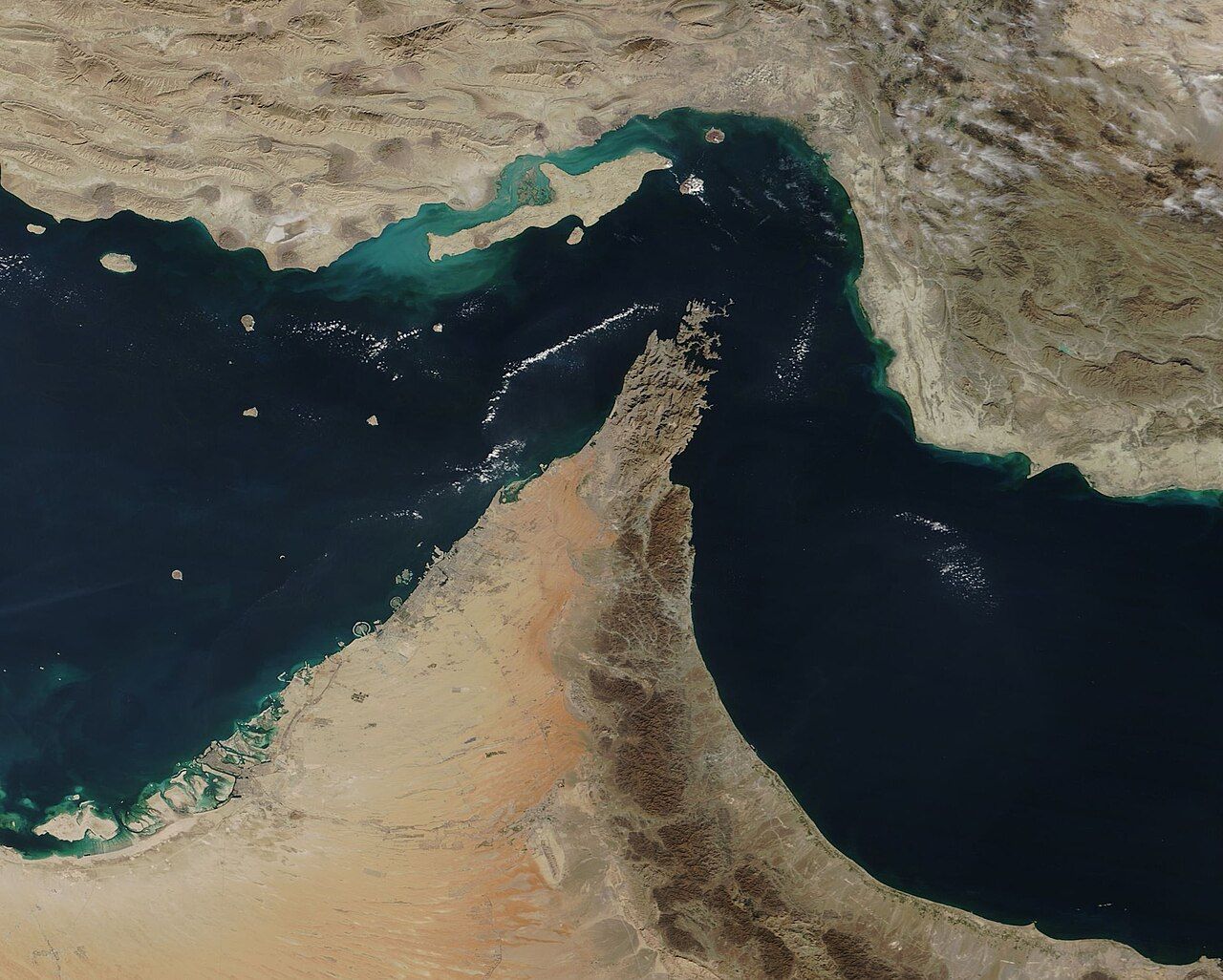
Iran says four tankers caught fire after hitting mines in the Strait of Hormuz, the narrow waterway that normally carries about a fifth of the world’s oil. AFP, via Malay Mail, reported that Iran’s Islamic Revolutionary Guard Corps said three tankers exploded over a 24-hour period while using what it called an unauthorized southern route near the Omani coast, and that Iran’s army reported a fourth vessel ablaze east of the strait. Al Jazeera reported the claims in its live coverage on Friday. It was not immediately clear which flags the ships flew or exactly when the incidents happened.
The claims came a day after US Central Command said it had cleared mines from the main transit routes. The IRGC challenged that assertion and demanded independent evidence. Gulf News reported that the UK Maritime Trade Operations center confirmed a tanker was struck by an unknown projectile near Khasab, Oman, at about 16:00 GMT on Thursday, but did not identify the weapon or who fired it. The Associated Press could not independently confirm Iran’s account.
The diplomatic track
The flare-up comes as both sides test whether talks are possible. Euronews reported, citing the Wall Street Journal, that Vice President JD Vance sent a letter to Mohsen Rezaei, head of Iran’s Supreme National Security Council, to explore a framework for negotiations and avert a new round of US strikes. President Donald Trump offered a different account, saying the contact was mainly about medical supplies. Iranian Foreign Minister Abbas Araghchi said Tehran is still giving diplomacy a chance and is in touch with mediators about a “seven-day plan.”
According to Gulf News, US envoy Tom Barrack told CNN that Washington and Tehran were “very close” to agreeing to a timeout, crediting Qatar and Pakistan. Iran’s parliament speaker, Mohammad Bagher Ghalibaf, replied that Tehran’s seven conditions must be met first. Iran has confirmed receiving Vance’s letter but has not answered it.
Background
The conflict began with US and Israeli strikes on Iran on February 28, 2026. Since then, Iran has sharply restricted traffic through Hormuz, and the US has blockaded Iranian ports while escorting other countries’ tankers. AFP reported that Central Command says it has helped Gulf states export 1.5 billion barrels through the strait since the summer. Separately, Yemen’s Houthi forces have claimed attacks on Saudi airports and oil facilities; Saudi Arabia has not confirmed strikes on those sites, though a Saudi-led coalition says it intercepted missiles fired toward Riyadh.
The price at the pump
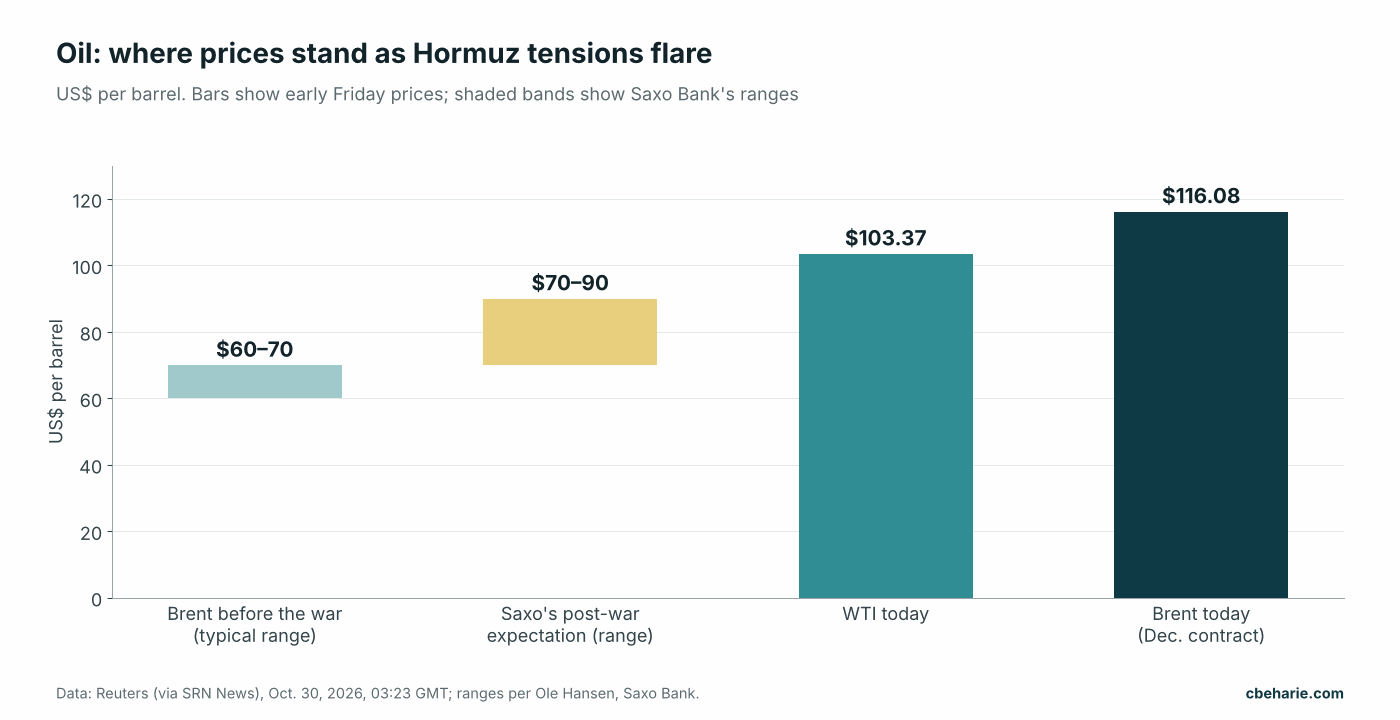
Reuters reported early Friday that Brent crude for December delivery rose to $116.08 a barrel and US benchmark WTI to $103.37, with Brent on course for a gain of nearly 11 percent this month. Saul Kavonic of MST Marquee pointed to “continued kinetic action around the Strait of Hormuz” as the reason prices are staying high. Ole Hansen of Saxo Bank said he expects crude to settle between $70 and $90 even after the war ends, compared with $60 to $70 before it.
The cost is being felt everywhere. Euronews reported that the European Union is paying about €10 billion more each month for oil imports than it did in 2025, even though volumes barely changed. In Jamaica, Jamaica Homes News reported that Petrojam’s ex-refinery prices for Thursday showed petrol down J$3.06 a liter and diesel slightly lower, while kerosene and cooking gas rose.
The Jamaican angle
What this could mean (analysis): Jamaica imports almost all of its fuel, so a sustained rise in crude eventually shows up in bus fares, electricity bills and food prices. Weekly price changes at Petrojam often lag global markets, which means this week’s small petrol cut may not last if Brent stays above $110. For a country still rebuilding after Melissa, every dollar on the oil bill is a dollar not spent on roofs and roads. Watch whether a US-Iran timeout materializes before or after the US midterm elections on November 3, and whether insurers and shippers keep using the southern route.
There is a wider Caribbean story here too. Several island economies depend on tourism, and higher jet fuel costs can push up airfares just as the winter travel season begins. Shipping and insurance costs also ripple through to the price of imported goods on supermarket shelves from Kingston to Bridgetown. None of this is decided in the region, which is why Caribbean governments have every reason to back any credible effort at de-escalation, whoever brokers it.
5. Central Banks Hold Steady as Inflation Refuses to Back Down
What happened
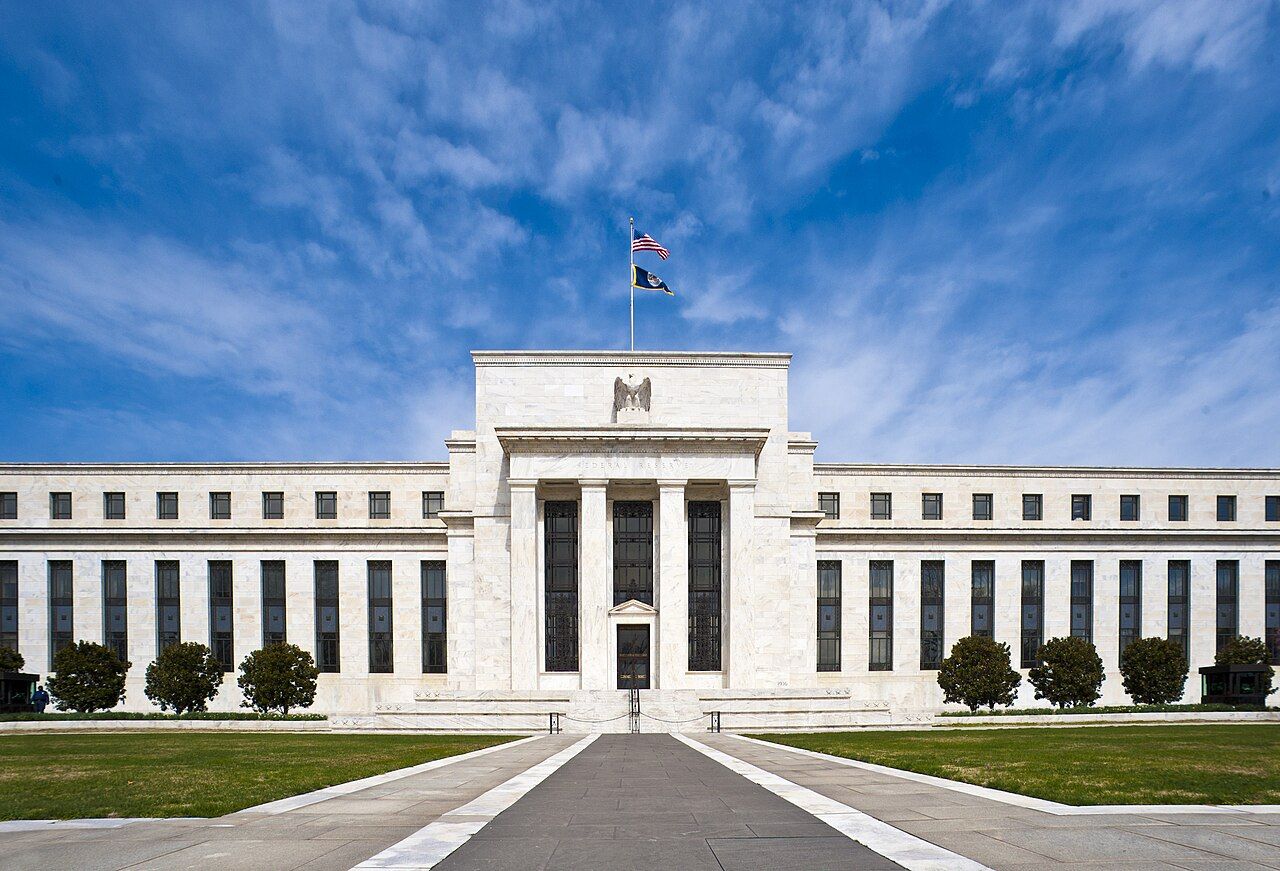
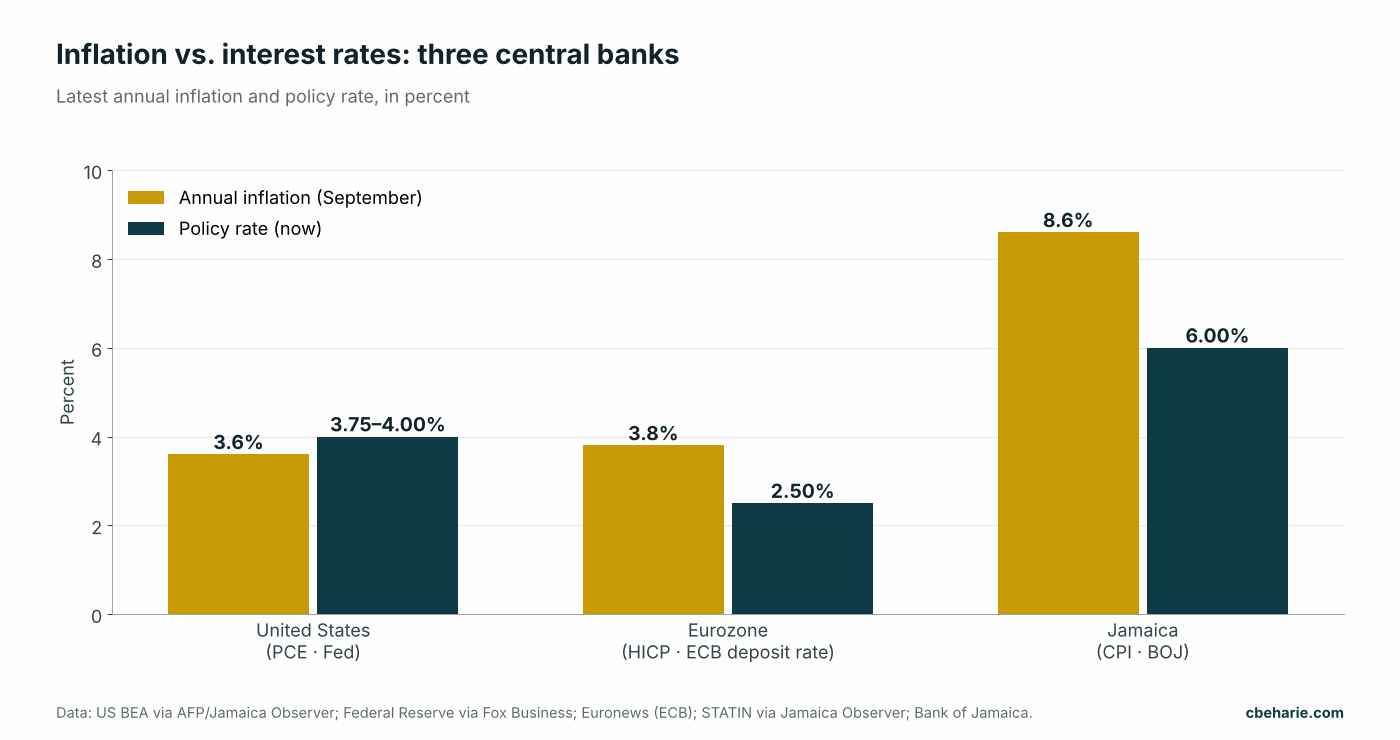
The world’s two most influential central banks both left interest rates unchanged this week. Fox Business reported that the US Federal Reserve held its benchmark rate in a range of 3.75 to 4 percent on Wednesday in a 10-2 vote, with Cleveland Fed President Beth Hammack and Governor Lisa Cook dissenting in favor of a quarter-point hike. The Fed raised rates in September for the first time since July 2023. Fed Chair Kevin Warsh told reporters that “politics played no role in the decision,” which came less than a week before the midterms.
A day later, Euronews reported that the European Central Bank kept its deposit rate at 2.5 percent, after two hikes earlier this year. The bigger surprise was personal: ECB President Christine Lagarde announced that she will step down on February 7, 2027, about nine months before her term ends. In a statement, she said she leaves behind “an ECB that is fit for the future.” The bank gave no reason, though reports have linked the timing to France’s presidential election in April 2027. Spain’s Pablo Hernández de Cos and the Netherlands’ Klaas Knot are seen as frontrunners to succeed her.
A strong economy with a sting
The latest US data showed why the Fed is cautious. The Lane Report, summarizing the Bureau of Economic Analysis, said the US economy grew at a 3.4 percent annual rate in the third quarter, up from 2.2 percent in the second, driven by business investment, consumer spending and government outlays. But AFP, via the Jamaica Observer, reported that the Fed’s preferred inflation gauge rose 3.6 percent in the year to September, with energy prices up 21.3 percent. One investment strategist, Chris Zaccarelli, called it “a bad news/bad news story” for interest rates. Markets largely expect another hike in December.
In Europe, inflation rose to 3.8 percent in September, nearly double the ECB’s 2 percent target, with energy costs from the Iran war a key driver. Pressure is also building in French bond markets, where 10-year yields recently topped 5 percent for the first time since 2002.
Jamaica’s own inflation fight
Jamaica faces the same headwinds, only sharper. The Jamaica Observer reported this month that annual inflation reached 8.6 percent in September, the highest since December 2022, as food prices jumped 12.4 percent and transport costs rose 14.6 percent over the year. The Bank of Jamaica raised its policy rate by half a point to 6 percent in late September, citing higher global commodity prices, drought-hit crops under El Niño, and tighter financial conditions abroad, including the Fed’s own hike. Its next decision is due November 18.
Why it matters for the diaspora and for Jamaica
What this could mean (analysis): When the Fed keeps rates high, borrowing costs rise worldwide, the US dollar tends to stay strong, and countries like Jamaica must work harder to keep their own currencies and inflation in check. For Jamaicans in the US and Europe, higher prices for gas, rent and groceries can squeeze the remittances that many families back home rely on. At the same time, a growing US economy supports jobs for diaspora workers and demand for Caribbean tourism. Watch the Fed’s December 8-9 meeting, the Bank of Jamaica’s November 18 announcement, and who Europe chooses to lead the ECB.
There is a practical lesson for households as well. When central banks around the world are leaning toward higher rates, variable-rate loans and credit card balances become more expensive, while savings accounts and fixed-income investments tend to pay a little more. For families managing budgets in Kingston, Brooklyn, Birmingham or Toronto, this is a season to look closely at debts, shop around for better savings rates, and plan for prices that may stay elevated into next year.
Closing Reflection: Counting the Cost
If there is a common thread in today’s news, it is the cost of rebuilding, and the honesty it takes to count it. Jamaica’s leaders are weighing how much more to borrow to finish a recovery. Haiti is asking its people to wait another nine months to choose their leaders. Central bankers are deciding how much pain is needed to bring prices down. And in the Gulf, the bill for a war that began in February keeps arriving in every country that buys fuel.
Jesus once told a story about a man who wanted to build a tower. Before laying the first stone, Luke 14:28 says, he sat down and counted the cost, to see whether he had enough to finish. It is a practical verse, and it does not tell us how to vote, what the right interest rate is, or which side of a fiscal debate is correct. Reasonable people will disagree on all of that. What it does ask of us is honesty: an open account of what a task will take, shared with the people who will help carry it.
That applies to governments publishing their numbers, to partners being clear about agreements, and to each of us in our homes, churches and businesses. Today, let us pray for families in Haiti waiting for safety and a vote, for those still rebuilding across western Jamaica, for seafarers working in dangerous waters, and for leaders who must count costs on behalf of others.
Walk good, and God bless.
Sources
- 1. Jamaica’s fiscal rules
- Jamaica Gleaner, “Fiscal reset under scrutiny,” October 29, 2026.
- IRIE FM, “Gov’t to seek further suspension of fiscal rules for 2027/2028 to facilitate Hurricane Melissa recovery,” October 28, 2026.
- Jamaica Gleaner, “Parliament approves suspension of fiscal rules to allow for Hurricane Melissa spending,” December 3, 2025.
- Jamaica Observer, “IAJ says 91.1% of Hurricane Melissa claims settled, $59.4 billion paid out,” October 29, 2026.
- Jamaica Observer, “Vaz warns JPS that it is on a tight deadline to lower electricity costs,” October 29, 2026.
- 2. Jamaica’s TCN transit arrangement
- Jamaica Observer, “Nine more TCNs depart Jamaica; Johnson Smith insists no criminals being accepted,” October 28, 2026.
- Jamaica Gleaner, “Nine more US deportees leave Jamaica under TCN arrangement,” October 29, 2026.
- Al Jazeera (Associated Press), “Jamaica accepts first flight of third-country deportations from US,” October 14, 2026.
- 3. Haiti’s election calendar
- Jamaica Observer (AFP), “Gang-plagued Haiti sets election dates for 2027,” October 29, 2026.
- Miami Herald (via Yahoo News), “Haiti announces new date for elections, extends registration deadlines,” October 29, 2026.
- Reuters (via Central Oregon Daily), “Haiti postpones first presidential election in a decade to July 2027,” October 28, 2026.
- Xinhua, “Haiti delays presidential election to July 2027,” October 29, 2026.
- 4. The Strait of Hormuz and oil
- Malay Mail (AFP), “Four tankers ablaze in Strait of Hormuz as Iran disputes US claim that sea lanes are mine-free,” October 30, 2026.
- Al Jazeera, “Iran war live: IRGC says four tankers struck mines in Strait of Hormuz,” October 30, 2026.
- Gulf News, “Middle East war: Iran claims tankers hit mines in Strait of Hormuz, UKMTO confirms strike off Oman; fired US general reportedly admitted Iran leaks,” October 30, 2026.
- Euronews, “JD Vance contacts senior Iranian official in bid to revive peace talks,” October 29, 2026.
- Reuters (via SRN News), “Oil set for fourth monthly gain as Hormuz tanker attack highlights supply risks from war,” October 30, 2026.
- Euronews, “Europe’s oil bill: EU pays €10bn more per month than in 2025,” October 29, 2026.
- Jamaica Homes News, “Petrol Falls J$3.06, Diesel Dips as Cooking Gas Rises,” October 29, 2026.
- 5. Central banks and inflation
- Fox Business, “Federal Reserve makes interest rate decision ahead of midterms,” October 28, 2026.
- Jamaica Observer (AFP), “US economy posts strong growth, inflation stubbornly high in challenge to Trump,” October 29, 2026.
- The Lane Report, “U.S. economy grows 3.4% in third quarter as investment accelerates,” October 29, 2026.
- Euronews, “ECB holds rates at 2.5% as Lagarde announces early exit with inflation near double the target,” October 29, 2026.
- Jamaica Observer, “Food prices drive inflation to 8.6%,” October 16, 2026.
- Bank of Jamaica, “Monetary Policy Press Release – September 2026,” September 28, 2026.
This briefing was prepared with AI research and writing assistance under Colin Beharie’s editorial direction. Every fact links to its original source. Spot an error? See our Sources & Corrections policy.
Discover more from Colin Beharie
Subscribe to get the latest posts sent to your email.